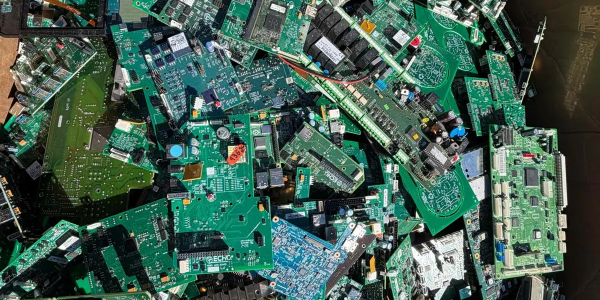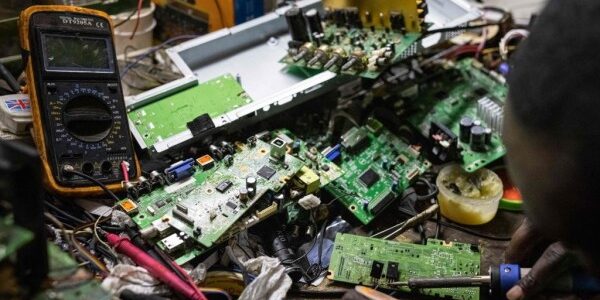
What is e-waste? Electronic waste, or e-waste, is any electrical or electronic product its owner has thrown out or no longer wants, from phones and laptops to TVs, cables, toys and appliances. The UN sums it up as any discarded product with a plug or battery. Recycle it properly at a certified recycler, not in the trash.
The world produced a record 62 billion kg of electronic waste in 2022. Only 22.3 percent of it was documented as properly collected and recycled, according to the Global E-waste Monitor 2024. Below, we cover what counts, the main types, why the e-waste amount keeps growing, why it matters and how to recycle your own old electronics in San Diego County.
What counts as electronic waste?
Electrical and electronic equipment becomes e-waste once its owner discards it with no plan to reuse it. The UN uses that definition in the UN Global E-waste Monitor 2024, published by ITU and UNITAR. So the electronic waste definition is about the owner's choice, not the condition of the device.
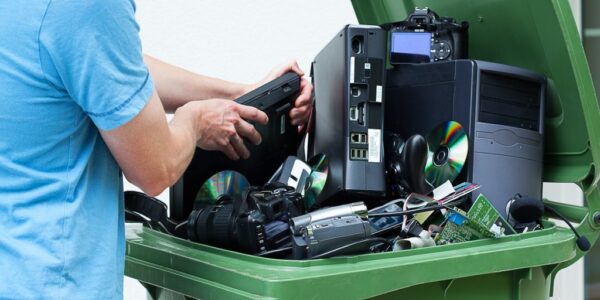
That has a practical side. A working TV left at the curb is e-waste. But a working laptop you sell to a friend is not, because someone still uses it.
At our intake counters we use a simpler rule. If it has a cable, a plug or a battery, treat it as e-waste. That covers more than people expect:
- chargers, power cords and extension leads
- vapes and e-cigarettes
- smart speakers and fitness trackers
- electric toothbrushes and shavers
- power tools and toys that light up or make noise
There are two edge cases. First, UN statistics and most laws count batteries separately from electronics, because they need different handling. They still don't belong in the trash, and the EPA says lithium-ion batteries should never go in household trash or recycling bins. Second, the UN figures don't count electronics built into cars as e-waste either.
Types of electronic waste, with examples
The UN sorts e-waste into six categories, based on how people collect and treat the items. The table shows everyday examples and how much of each the world generated in 2022.
| UN category | Everyday examples | Generated worldwide in 2022 |
|---|---|---|
| Small equipment | microwaves, toasters, kettles, vacuum cleaners, shavers, toys, small tools, e-cigarettes | 20.4 billion kg |
| Large equipment | washing machines, dryers, dishwashers, electric stoves, large printers and copiers | 15.1 billion kg (plus 0.6 billion kg of solar panels, shown separately) |
| Temperature exchange equipment | refrigerators, freezers, air conditioners, heat pumps | 13.3 billion kg |
| Screens and monitors | TVs, monitors, laptops, notebooks, tablets | 5.9 billion kg |
| Small IT and telecommunication equipment | phones, personal computers, routers, GPS devices, printers | 4.9 billion kg |
| Lamps | fluorescent, high-intensity discharge and LED lamps | 1.9 billion kg |
Small devices are the biggest category by weight, and they are also the easiest to toss in a kitchen bin. UNITAR reports that recyclers handle only 12 percent of small equipment.
If you want to check a specific item, see the items we recycle. Then, for advice on a single device, such as an old TV, printer or phone, our guide on what to do with old electronics goes item by item.
Key e-waste statistics
Four figures give the big picture, and all of them come from the UN Global E-waste Monitor 2024, which describes the year 2022.
- 62 billion kg of electronic waste was generated worldwide in 2022, up 82 percent from 2010.
- That is 7.8 kg per person on average.
- 22.3 percent (13.8 billion kg) was documented as formally collected and recycled in an environmentally sound way.
- The total is projected to reach 82 billion kg by 2030, with the documented recycling rate falling to 20 percent if trends continue.
The word documented matters, because it means what countries could count, not every device that anyone ever recycled. As for the rest, it went through recycling outside formal systems, informal handling or regular waste.
For regional figures, US and California data and the sources behind each number, see our page of e-waste statistics.
Why is electronic waste growing so fast?
Between 2010 and 2022, e-waste grew almost five times faster than documented recycling, according to the same UN report. The UN names five drivers, and each one shows up in an ordinary home.
- Technological progress. New models arrive every year, and software updates can make a working phone or laptop feel slow and old.
- More consumption. Homes hold more devices than they used to, from tablets and earbuds to smart doorbells and gaming gear.
- Limited repair options. Sealed cases, glued batteries and missing spare parts make repair hard. As a result, a fix often costs close to the price of a new device.
- Short product lifecycles. People often replace devices while they still work, and makers design cheap gadgets to last a few years at most.
- Weak e-waste infrastructure. Many countries still lack the collection and recycling systems to keep up with the volume.
None of this means you should feel guilty about owning a phone. Instead, it means the order of choices matters. Using a device longer, repairing it and passing it on all slow the pile down before recycling ever comes into it.
Why is electronic waste a problem?
Old electronics cause trouble when they end up in the wrong place. In that case, the harm falls on people and the environment, on resources and on privacy.
Toxic materials
Electronics can contain lead, mercury, cadmium and brominated flame retardants. The World Health Organization explains that these are not a risk while a device is in use. However, harm comes when people burn, dump or break apart e-waste without controls.
For example, the UN estimates that non-compliant handling releases 58,000 kg of mercury and 45 million kg of plastics with brominated flame retardants every year. We cover who faces exposure and how in our article on the effects of e-waste on health and environment.
Lost materials
The metals in 2022's electronic waste were worth about USD 91 billion, but recyclers recovered only about USD 28 billion, the UN estimates. Copper, gold and iron make up most of that value. So every phone in the trash is metal that someone has to mine again.
Data left on devices
Phones, laptops and hard drives can still hold photos, passwords and account details long after you stop using them. So you need to wipe or destroy that data before the device leaves your hands, or use a recycler who does it for you.
Is electronic waste hazardous waste?
Some of it is. CalRecycle notes that e-waste has no single clear legal definition, but some items are hazardous, such as non-working CRT TVs and monitors and devices that contain mercury lamps. For instance, a phone on your desk is not dangerous. But a cracked tube TV in a landfill is a different matter.
California sets its own rules for how households and businesses must handle old electronics. Our guide to California e-waste laws explains them.
What happens to e-waste when you recycle it?
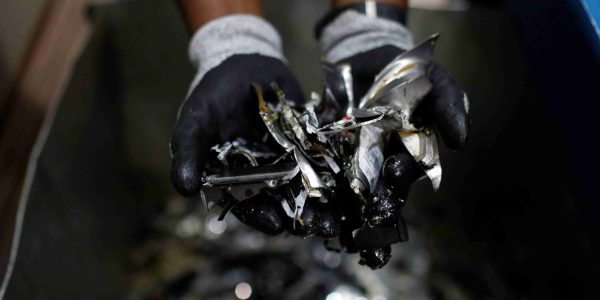
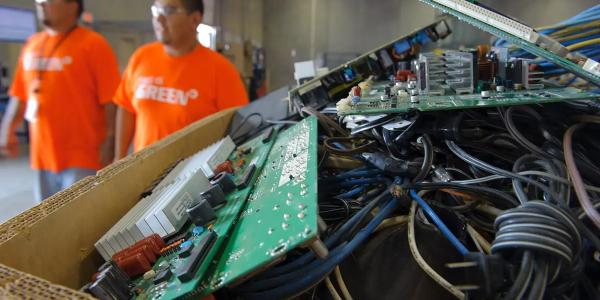
At a proper recycler, staff first sort items by type. Next, devices that store data go for data destruction. Workers then take the rest apart by hand and machine, so batteries and hazardous parts come out first. Finally, metals, plastics and glass go to specialist processors that turn them back into raw materials.
When you drop an item at a Dream E-Waste location, we process it at our Point Loma or Chula Vista facility (Point Loma is R2v3-certified), and we wipe and destroy every device that holds data by default. Our certifications page shows the details.
Repair, reuse or recycle?
Recycling is the last step, not the first. The EPA suggests upgrading a computer before replacing it, deleting personal data and removing batteries before you recycle. So if a device still works, you can often sell it, donate it or hand it down to someone who needs it.
Recycle when a device is beyond a sensible repair or too old to be useful to anyone. Also recycle it if it holds data you would rather destroy than pass on.
How to recycle electronic waste in San Diego
Dream E-Waste has six locations across San Diego County, with no appointment needed. Three are full recycling centers (Point Loma, Chula Vista and San Marcos) and three are electronics-only drop-off locations (Miramar, Kearny Mesa and Oceanside). Standard electronics are free to drop off. However, a small fee applies to a few items, and each of those has its own item page with the details. Our page on free e-waste drop-off in San Diego has addresses, hours and what each site accepts.
Businesses and households with five or more computing devices, such as computers, laptops, monitors, servers, printers or TVs, can ask for free pickup.
Whoever you use, also look for a certified recycler. The EPA recommends recyclers certified to R2 or e-Stewards. Dream is R2v3 certified and is a registered California recycler (CEWID 127772).
What we can't take: hazardous waste such as paint, chemicals, fuel or other liquids, and damaged batteries (loose, swollen or leaking). Batteries still inside a device are fine, though. Instead, for damaged batteries, book an appointment with the City of San Diego Miramar Recycling Center through the City's website.
How do I get electronic waste ready to drop off?
A few minutes of prep visits quicker and keeps your information safe.
- Back up the photos, files and contacts you want to keep.
- Sign out of your accounts and delete personal data where you can. We wipe and destroy every data-bearing device by default, so this is an extra layer, not a requirement.
- Take out batteries that come out easily, as the EPA suggests. If you find a swollen, leaking or damaged battery, keep it apart and follow the advice above.
- Bundle loose cables and chargers together in a box or bag so they are easy to hand over.
- For a large load, office equipment or anything unusual, email us details or photos before you come.
Then bring everything in one trip. The three drop-off locations take electronics only, so take appliances, scrap metal and fluorescent tubes to Point Loma or Chula Vista instead.
Next step
Got a box of old electronics in the garage? Check what we accept first, then bring it to the location nearest you. Once it arrives, we sort it, destroy any data and send the materials on for recycling.
Frequently asked questions
Is a working phone e-waste?
A working phone becomes e-waste only when its owner discards it. If you sell it, give it away or hand it down, it is still in use and not waste. That is why reuse comes first. So wipe your data, then pass the phone on. Recycle it once nobody can use it any more.
Are cables, chargers and batteries e-waste?
Cables and chargers are e-waste, and they are among the most common items we receive. UN statistics and most laws track batteries as a separate stream because they need different handling. Even so, they must not go in the trash. Take them to a battery drop-off or leave them inside the device when you recycle it.
How much e-waste does one person produce?
The world average was 7.8 kg of e-waste per person in 2022, according to the UN Global E-waste Monitor 2024. People in the United States and Canada produced far more, about 21.2 kg each. However, those figures cover everything with a plug or battery, from phones to fridges, so a single appliance can move the number a lot.
What percentage of e-waste is recycled?
Worldwide, the UN documented 22.3 percent of e-waste as formally collected and recycled in 2022. Documented means what countries could count. More goes through recycling outside formal systems, but the UN cannot confirm how well. The UN also expects the rate to fall to 20 percent by 2030 because e-waste is growing faster than recycling.
Who is responsible for e-waste?
Everyone along the chain shares responsibility for e-waste. Manufacturers design the products, sellers and governments set up collection, owners decide where old devices go and recyclers process them. In California, a state program funds the recycling of some devices. As a result, you can drop off many electronics without charge at registered recyclers.