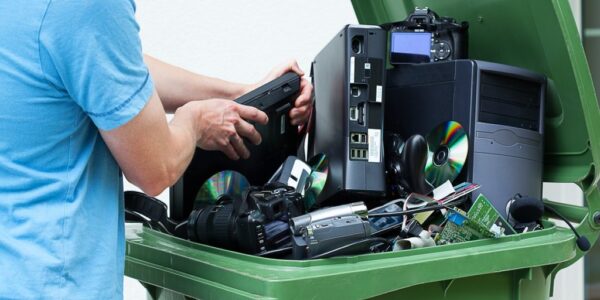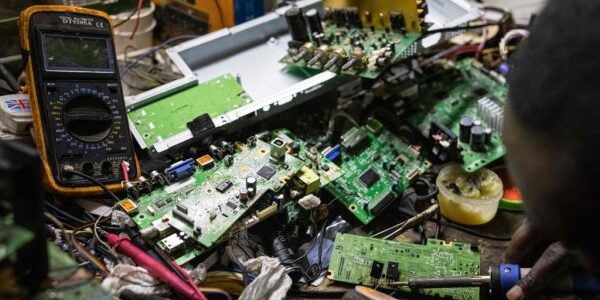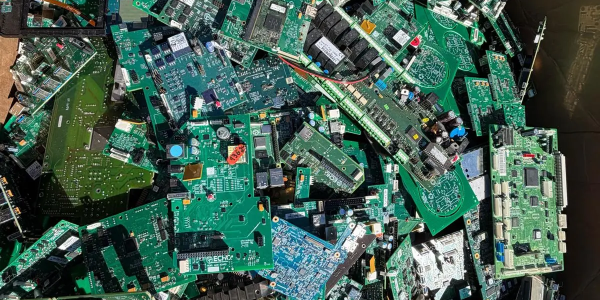


In today’s digital era, businesses rely on electronic devices for nearly every operation. Upgrading technology helps companies improve efficiency and grow, but replacing outdated equipment also creates electronic waste. Old computers, servers, phones, and printers may contain hazardous materials and sensitive business data that require proper handling. California classifies most discarded electronic devices as universal waste, a category of hazardous waste, so businesses cannot throw them in regular trash. Instead, companies must securely destroy stored data, work with authorized recyclers to dispose of electronic waste properly, and maintain records that document both processes.
This commercial e-waste compliance checklist covers the key steps for San Diego businesses, whether you are replacing ten laptops, clearing an office or decommissioning a server room.
Quick Checklist
- Inventory retired equipment and flag devices that store data
- Choose a data method for each device, certified wiping or physical destruction
- Store equipment securely, labeled with the date it became waste
- Send it out within one year, never to the trash or a dumpster
- Verify your recycler’s certifications, California approval and downstream handling
- Get Certificates of Destruction and recycling records
- Keep records based on your legal, contractual and internal requirements
1. Inventory What You Are Retiring
List each device by type and quantity, and add asset tags or serial numbers where you can. Mark every item that stores data. That inventory becomes the record you match against your recycler’s paperwork later.
Common business e-waste items include:
- Desktops, laptops and workstations
- Servers, storage arrays and networking gear
- Monitors and commercial displays
- Printers, copiers and multifunction devices (most have hard drives)
- Phones, tablets and telecom equipment
- Loose hard drives, SSDs, USB drives and backup tapes
2. Destroy the Data First
Deleting files or running a factory reset doesn’t reliably make data unrecoverable. California Civil Code 1798.81 requires businesses to shred, erase or otherwise make personal information in customer records unreadable when disposing of them. Healthcare, finance, legal and government organizations often have additional requirements.
| Method | Best for | Result |
| Certified wiping (sanitization) | Devices with resale value may qualify for IT equipment liquidation. | Data made unrecoverable, device still works |
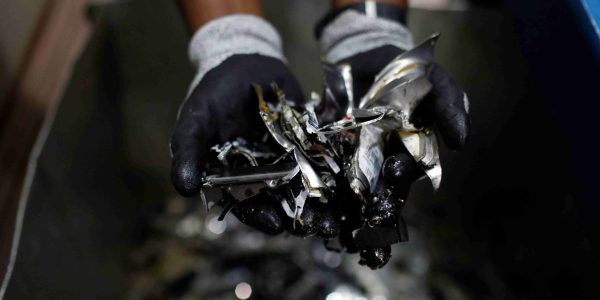
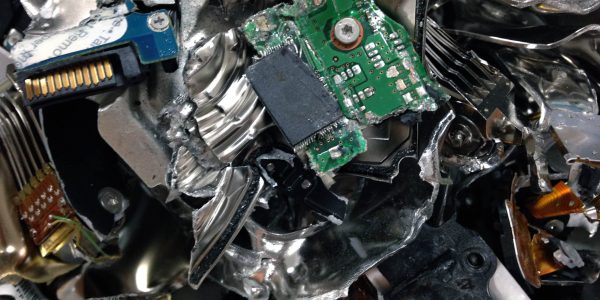
| Physical destruction (shredding) | Failed drives, media that can’t be reliably wiped, high-risk data | Drive destroyed so data can’t be recovered |
For the most sensitive data, choose on-site shredding so drives are destroyed at your location and never leave your control.
Ask your provider which sanitization standard it follows and what documentation you’ll receive. The current federal guidance is NIST SP 800-88 Revision 2. It replaced the 2014 version and says old multi-pass overwriting methods, such as DoD 5220.22-M, are unnecessary. The right method depends on the type of drive and how sensitive the data is.
3. Store It Securely Until Pickup
Put retired equipment in a locked room or cage that only a few people can access. Keep it apart from regular trash, and set aside any swollen or damaged batteries, which can catch fire.
Label the area or containers with the date the equipment became waste, or the date you received it from another location. California generally limits universal waste storage to one year, and you must be able to show when that period started.
4. Never Use the Trash or a Dumpster
In California, DTSC regulates electronics, batteries and CRT monitors as universal waste. Businesses of all sizes, regardless of exemption status, must keep universal waste out of the trash. Send it to an authorized collector or recycler, and avoid junk haulers that can’t tell you where your electronics end up.
5. Choose a Qualified Recycler
Before you book a pickup, confirm the provider:
- Holds R2v3 or e-Stewards certification and can show what it covers
- Is a CalRecycle-approved e-waste collector and recycler (ask for its CEWID number)
- Explains how data devices are tracked, wiped or destroyed
- Provides Certificates of Destruction and recycling documentation
- Can tell you where equipment is processed, including downstream facilities
- Has a clear process for equipment that can be reused or resold
6. Keep the Paperwork
Records are your proof if a client, auditor or regulator ever asks. Keep these together:
- Your equipment inventory, with asset tags or serial numbers where available
- Pickup or drop-off receipts with dates, quantities and provider details
- Certificates of Destruction for devices that were wiped or destroyed
- Certificates of Recycling or other proof of final disposition
- Serialized asset reports for larger projects
Set a retention period that fits your legal, contractual and internal requirements, and store everything where IT, security and compliance can reach it.
7. Plan Big Projects Ahead
Office moves, IT refreshes and data center shutdowns go smoothly when you plan them. Send your provider an equipment list early, agree on a pickup date that fits your schedule, decide on on-site or off-site destruction, and confirm which documents you’ll receive.
Which Recycling Service Fits Your Business?
| Your situation | Best option |
| A small number of devices | Free drop-off at any of our six San Diego County locations, no appointment |
| Multiple devices or bulky equipment | Free business pickup |
| Drives with customer, patient or financial data | Certified wiping or hard drive shredding, with a Certificate of Destruction |
| Data that must be destroyed at your premises | On-site hard drive destruction |
| IT refresh, office move or server room shutdown | IT asset disposition or data center decommissioning |
| Working equipment with resale value | IT equipment liquidation (we assess what can be resold) |
Not sure which fits? Contact Us and share details of equipment, rough quantities and location, and we will recommend the right service.
How Dream E-Waste Helps San Diego Businesses To Recycle Electronics
Dream Electronic Recycling is an R2v3-certified electronics recycler and a CalRecycle-approved collector and recycler (CEWID #127772). Businesses, schools and government agencies across San Diego County use us for:
- Free business pickup anywhere in San Diego County
- Six drop-off locations in Point Loma, Chula Vista, San Marcos, Miramar, Kearny Mesa and Oceanside
- Data destruction aligned with NIST SP 800-88, including on-site hard drive shredding
- Certificates of Destruction and recycling documentation for your records
- Local processing at our R2v3-certified San Diego County facility
- Large projects, from office cleanouts to full data center decommissioning
Frequently Asked Questions
Can a San Diego business throw old computers in the trash?
No. California regulates most discarded electronics as universal waste, and no business of any size may put universal waste in the trash or a dumpster. Send it to an authorized collector or recycler.
Is a factory reset enough before recycling a computer?
Not reliably. A reset can leave recoverable data behind. Use certified wiping or physical destruction based on the drive type and data sensitivity, and get a Certificate of Destruction.
How long can my business store old electronics?
Businesses can generally store e-waste for up to one year from the date the equipment becomes waste or arrives from another location. Label each storage area or container with the applicable date so you can track how long you have stored the equipment and demonstrate compliance.
Do you like this personality?
What is a Certificate of Destruction?
It’s a document from your provider confirming which devices were wiped or destroyed, the method used and the date. Ask what yours will include, and keep it with your disposal records.
What documents should I get when recycling business computers?
Ask for pickup or drop-off records, Certificates of Destruction for data-bearing devices, and recycling documentation. For large projects, also request a serialized asset report.
Is business e-waste pickup free in San Diego?
Yes. Dream E-Waste offers free pickup of business electronics throughout San Diego County. Send us your equipment types, rough quantities and address to schedule.
Do all businesses have the same commercial e-waste compliance requirements?
No. Businesses that only generate e-waste follow simpler rules than those that collect, store, transport or recycle it for others, such as hosts of collection events. See DTSC’s e-waste guidance for your situation.
Schedule Your Business E-Waste Pickup
Following a commercial e-waste compliance checklist doesn’t have to be complicated. Dream E-Waste handles pickup, data destruction, R2v3-certified recycling and the paperwork, with free business pickup across San Diego County.